How to Set Up a Sustainable Packaging Station Without Slowing Down Shipping
.png)
Making the switch to sustainable packing material is a great choice, for a number of reasons. You can enjoy better efficiency and improved merchandise protection while also making your business more environmentally friendly.
If you’re a small or medium-size business, you may not have the time or infrastructure in place for a sustainable packaging station setup. So we created this guide to help you, so you don’t slow down your shipping process, which your revenue no doubt relies on. Keep reading to learn:
- How to choose the right sustainable products and dispensing systems for your company
- Tips to streamline your packaging station setup, no matter what size your business is
- Advice on setting up your packaging station now to allow for growth in the future
You’ll find organizing and using your packaging station much easier when you follow these suggestions. Your operation won’t notice even a brief drop in productivity, so your profits can stay right where you want them.
Choose the Right Products and Dispensing Systems for Your Needs
Before you can organize a sustainable packaging station and decide on a workflow, it’s essential to choose the packing materials that best suit the unique requirements of your business. Then you’ll have a better handle on how to set up your station. If you do it in reverse, you’ll likely find your system is crowded or inefficient because you left out vital elements or placed items in the wrong order.
Choose the Best Product Wrap and Void Fill
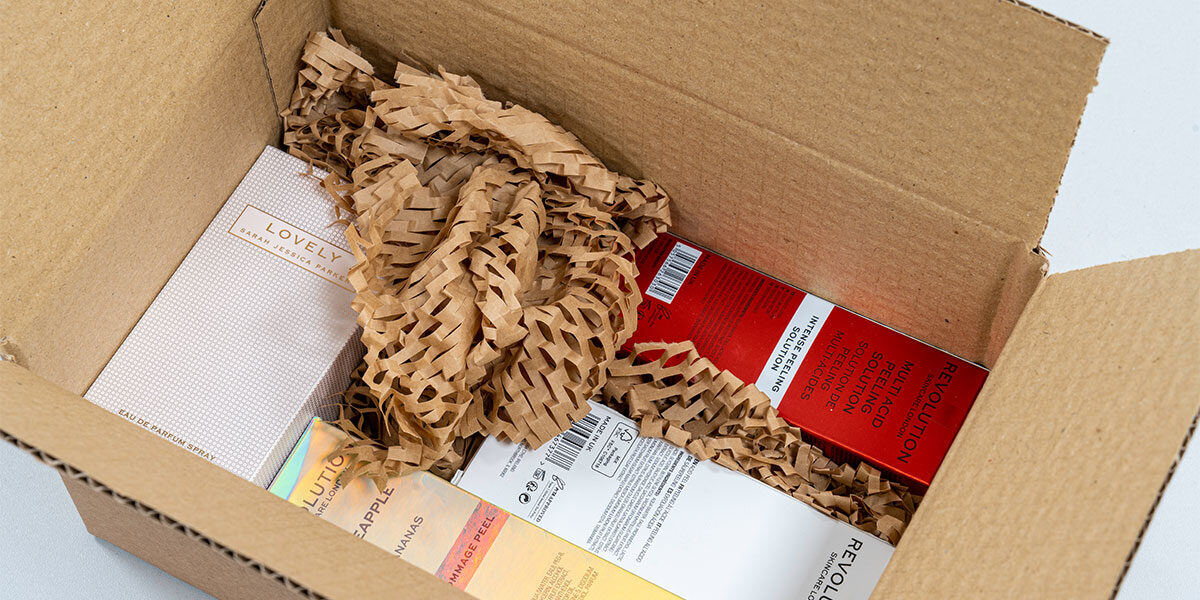
If you’re packing items that need any amount of cushioning, you’ll want to have plenty of sustainable product wrap and void fill on hand. Product wrap goes around items to prevent wear from rubbing as well as to reduce the risk of breakage. Void fill should be placed in empty spaces in larger containers and shipping boxes for extra cushioning against impact damage.
Choose the best sustainable packaging made from kraft paper with honeycomb structure and you’ll get multiple benefits in one. First, slit-paper packaging clings to itself, so there’s no need for additional tape or adhesive. This saves space, which is especially helpful with limited packing space.
Also, you’ll get better cushioning with less product because this packing material doesn’t compact over time. You enjoy fewer costly returns for damage, less waste, and less space devoted to storing packing material.
And of course, if you’re using sustainable packaging, you’re making an environmentally friendly choice for the planet. This isn’t merely a feel-good decision. It protects the health of you, workers, and customers instead of exposing everyone to potentially harmful plastic packaging. It shows your brand is responsive to consumers dedicated to the planet, and it puts your business ahead of the curve with new regulations regarding recycling and eliminating single use plastics.
Select Dispensing Systems That Work for Your Packing Assembly
Once you’ve chosen your packing materials, you need to think about whether you want manual dispensing, automated dispensing, or a combination of the two. How to choose?
Manual dispensing can be done at whatever speed you like, and it requires virtually no training for employees. No electrical power is needed either, making it ideal for store front counter packing or travel to events like art fairs, as well as moving around your business. You’ll find a variety of manual dispensers for sustainable packaging that are quick to set up and refill. Some of the dispensers can themselves be recycled, which is a bonus.
Before committing to a dispenser, check its measurements. Then, make certain you have enough space for it at your packaging station, especially if you want it mounted in place.
Automated dispensing is great when you want steady speed and a consistent amount of packing material, like void fill, with every handful. When you have a higher volume of boxes to pack, an automated dispenser can be a lifesaver. You set the rate and volume of material, and the dispenser does the rest. Because this type of dispenser requires electricity, look for one with wheels, so it can be moved easily. Also, models with a foot pedal for rapid start/stop control give users more flexibility.
Tips to Streamline Your Packaging Station Setup and Operation
Keep Packaging Separate from Other Tasks
Every business has its own needs when it comes to packing and shipping. For instance, your medium-size company may have a portion of a warehouse dedicated to just packaging. But if you’re a smaller business or sole proprietor operation, you may not have that luxury. You might have to squeeze a packaging station into your studio or home garage.
Also if you have retail outlets, you may want a packaging area in back for outgoing shipments but also want a small setup at the checkout counter for customers carrying fragile items with them after purchase.
No matter what size your business, however, try to keep your packaging station reserved exclusively for packing. This will cut down on clutter and keep the process more efficient. The smaller your business’s physical space, the more you need to guard your packaging area from other activities.
Short on packing space? Sometimes an L-shaped or U-shaped packing station makes the best use of your footprint. Also, using vertical storage like shelves or peg boards saves on real estate. A retractable arm for your computer or tablet is another space saver.
Place Your Packaging Station Near the Origin of Merchandise
Think about the order in which items go to packaging. You might be picking items from bins and combining individual merchandise in one box. Or some goods may go through gift wrapping or subscription box presentation first. So, your packaging area should be as close to the origin of merchandise as is logically possible to save time and labor. If you need to move your packaging station around, try putting it on a table with caster wheels that can lock in place when it’s stationary.
Measure Everything in Advance
It’s worth mentioning again: before you put your packaging station to use, measure the space and where you plan to put everything first. Some types of product wrap come in different widths, so their dispensers will take up various amounts of space. Also, the size of your merchandise, how much wrap you pull out for each item, and the size of your shipping boxes will influence the depth of your work station and spacing of components.
Consider Worker Ergonomics
You may want to solicit input from your employees about packaging to avoid repetitive use injuries and the like. Some workers may prefer to stand, while others may need to sit—think about having work stations that allow either or both. Anti-fatique mats will help packers who need to stand for hours at a stretch.
Make sure everything is reachable by people who need to access packing materials. And remember that if different workers are using the same packaging station, it must function equally well for all of them.
Store Packing Materials Nearby
Similarly, keep your packing supplies near your packaging station too. If you have a large quantity of packing materials, consider having a portion of each product at the packaging station and storing the bulk elsewhere. Then, restock the station every day or so as needed, similar to how grocery stores keep a stock of bags at every cash register to handle immediate needs.
Separate SKUs, If Possible
If you have individual packing processes for different SKUs, think about having a packing station for each one or for ones that are similar. To avoid confusion, post packing instructions above each one. If you have to combine SKUs in one station, color code packing materials for better clarity.
Lay Out Materials in the Order You Use Them
When arranging your packaging station, whether on a bench in your garage or series of warehouse counters, set out the materials in chronological order of use. For example, if you are boxing ceramic place settings, it might look like this:
- Items are delivered to the packaging area by conveyor belt or on a cart or trolley.
- Each plate, bowl, and mug is wrapped with product wrap.
- A shipping box is needed (pre-assembled or put together from a flat stack).
- Void fill is added to the empty box for cushioning on the bottom.
- The ceramic items are added to the box, with more void fill placed around them.
- Paperwork, like receipts, coupons, etc., are added to the top of the box.
- The shipping box is sealed shut with packing tape.
- A label and postage are added to the box, along with “fragile” stickers or stamps.
- Outgoing parcels are placed in a designated area for pickup or post office delivery.
Another thing to think about is where your computer, bar code scanner, or label-generating machinery is placed. If every order is identical, it might go towards the end of your setup when you’re finishing each shipping box. But if orders are all different, you may want it placed at the start of the operation, so you know what you’re packing in each box. Likewise, a scale for weighing boxes might need to be added somewhere in the line.
Add a waste and recycling area nearby too. This cuts down on mess, reduces hazards, improves efficiency, and encourages workers to use the right receptacle for disposal, rather than just throwing everything in a trash bin to save time.
Plan Now for Scaling to Handle Growth and Busy Periods
Say you’re arranging bookshelves in your living room. You leave room for future books, photographs, and decorative knick knacks, right? You need to do the same with your sustainable packaging station.
Hopefully, your business will thrive and grow, necessitating more space for your packing process. And until then, you probably still have seasonal highs or holiday busy weeks where you need to accommodate extra volume.
It’s smart to get in front of scaling now. You can do that by:
- Leaving empty working and storage space in your current setup
- Keeping a list of what’s currently working and what’s not
- Planning your next work space in a larger facility
- Exploring the cost of expanding your current rental
- Budgeting for a higher volume of sustainable packing material
Let the HexcelPack Team Assist with Your Setup
Not sure which sustainable packing products or dispensing systems you need? Have questions about setting up your packaging station? Our experts at HexcelPack are here to help you.
Reach out today with your questions. We can direct you to the best products for your needs and customize dispensing solutions for you.