A Guide to Product Packaging: What is Considered Sustainable?
Everyone seems to be talking about sustainable packaging these days. But what does that actually mean? Businesses need to understand what is considered sustainable so that they can make the right choices for new packaging regulations, safety, and operational efficiency.
And you’ll probably be surprised at how many advantages there are to switching to sustainable packaging and ditching older alternatives that harm the planet.
Sustainable Packaging: A Functional Definition
Sustainable packaging is an eco-friendly packaging material used to wrap, protect, and secure products during shipping and storage. The goal is to reduce waste, conserve resources, and minimize pollution. To accomplish that, sustainable packaging is typically recyclable, compostable, or biodegradable. In the food and pharmaceutical world, you’ll also find some sustainable packaging that’s dissolvable.
What Does “Recyclable” Really Mean?
Technically, lots of packaging products are recyclable. But in practice, they’re not really recyclable. Why? Because only a few facilities nationwide can recycle them. If your community doesn’t have access to one of these facilities, your “recyclable” plastic packaging will wind up in a landfill. There, it can take anywhere from decades to centuries to break down.
Truly sustainable packaging is what we call “curbside recyclable.” That means anyone can put it in their regular recycling bin for pickup with their scheduled refuse collection. In the case of Kraft paper sustainable packaging, it can also be composted. It can be added to residential or municipal compost to form soil for gardening and landscaping.
Sustainable Packaging Is Responsibly Sourced and Manufactured
Some old-fashioned packaging is fabricated from synthetic chemicals. This process not only drains resources but also often releases pollutants back into the environment through air or water.
Recyclable/compostable kraft paper packaging, however, is manufactured in a more responsible way from renewable resources. This is a key part of the “sustainable” definition.
Customers and Workers Have Zero Safety Concerns with Sustainable Packaging
Many of those same non-sustainable packaging materials are also not safe for employees and consumers to handle. This is especially true of plastic packaging.
Plastic sheds microplastics—not only when it breaks down in landfills, but also during everyday exposure. Microplastics can be inhaled or absorbed through the skin. Given that we already have too many microplastics in the environment, medical experts caution that people should limit other avoidable sources of exposure to them. Recent research shows that microplastics are linked to a long list of health problems, from infertility to respiratory illness to cardiovascular disease.
A better alternative is sustainable packaging. It’s safe for you and your customers. And it protects workers who must also handle packing materials, sometimes for hours at a time.
Why Sustainable Packaging Is Better for Businesses Today
Sustainable packaging is better for the earth and better for human health. But it can also be a boon to business owners, especially if they choose the right packing solutions.
Better Efficiency from Slit-Paper and Honeycomb Structure
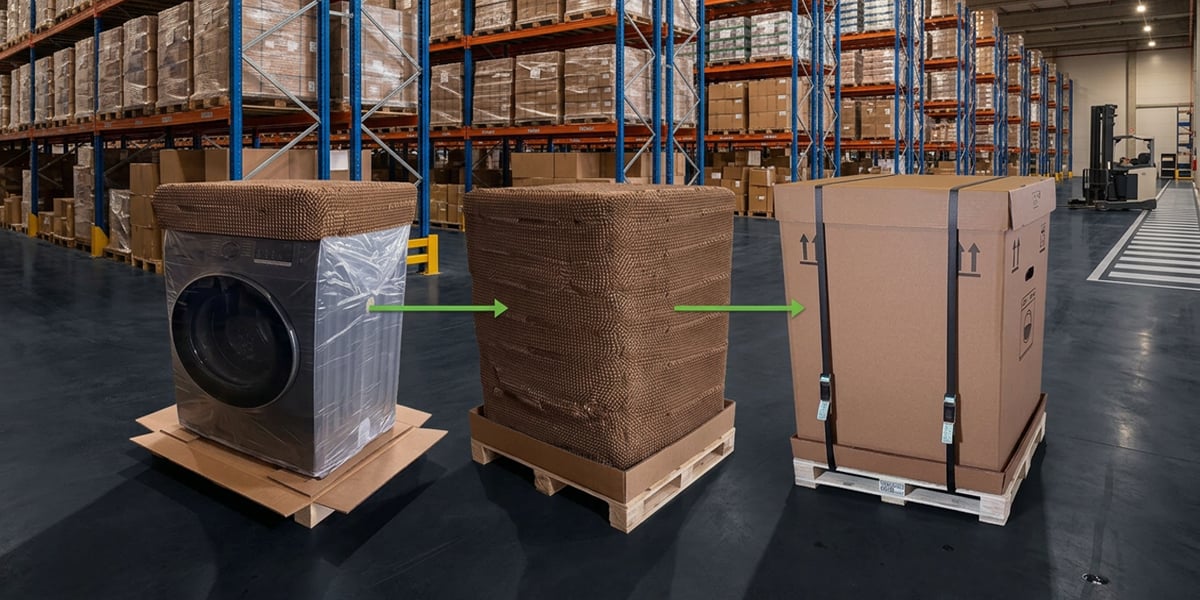
Want to reduce the cost of damage-related merchandise returns and exchanges? Consider using sustainable packaging with a honeycomb structure that mimics a natural beehive. It offers better cushioning because it doesn’t become compressed over time. So you don’t need to use extra care, hoping your items arrive unbroken at their destination.
Slit-paper design also benefits pallet wrap. Similarly, you can reduce waste and labor when wrapping pallets. You’ll enjoy better load stability, which protects both your goods and your workers.
Enhanced Protection and Safety Without Wood Crating
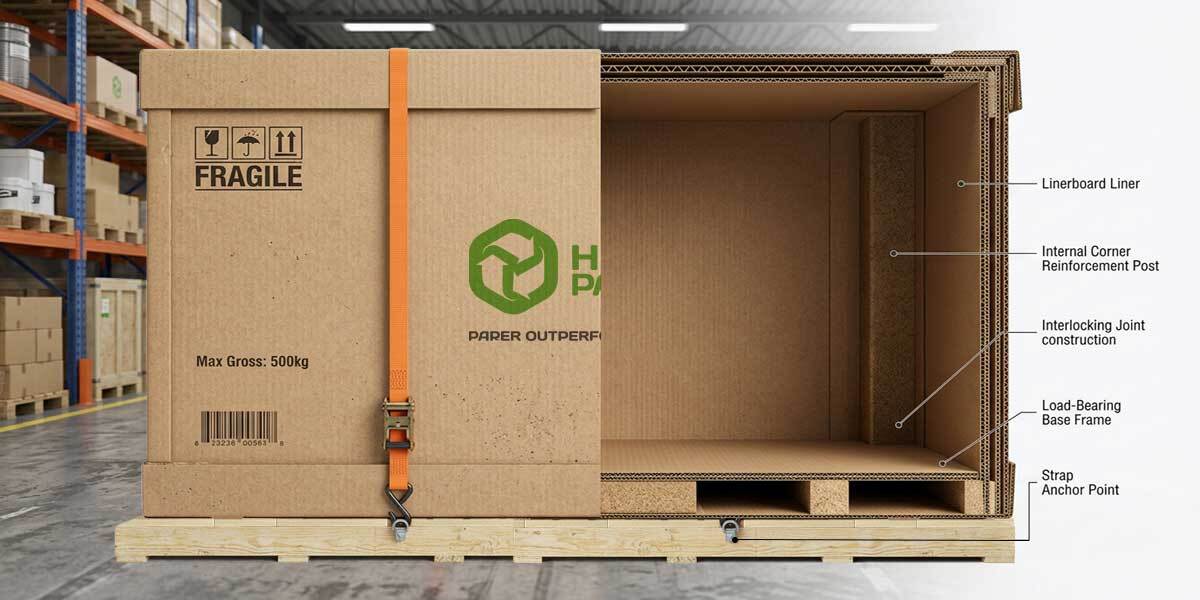
What about crates used to ship heavy and oversized items? Say goodbye to chemically treated wood crating that’s difficult to dispose of safely. Wood-free crating made of recycled materials can be recycled and reused multiple times for items such as automotive and aeronautical parts and fine art.
Compliance with New and Emerging Packaging Regulations
Multiple states have implemented or are in the process of creating new rules to phase out single-use packaging and beef up recycling programs. European Union nations and many countries in Asia and Oceania are doing the same thing.
If your company wants to stay compliant with these developing regulations, you’ll be required to use sustainable packaging or face fines. Eventually, these markets will close to you.
Meeting Customer Demand for Earth-Friendly Packaging
Consumers have been a driving force behind some of these new packaging rules. They’ve long known that sustainable packaging is safer and healthier for the planet.
Although younger demographics are particularly invested in earth-friendly packaging, this movement reaches across all ages. You can retain your committed customers and attract new ones by using eco-conscious packaging. In fact, surveys show that these customers support businesses that value sustainability and are even willing to pay more for sustainable packaging.
Examples of Sustainable Packaging That Customers Love
Kraft Paper Shipping Solutions
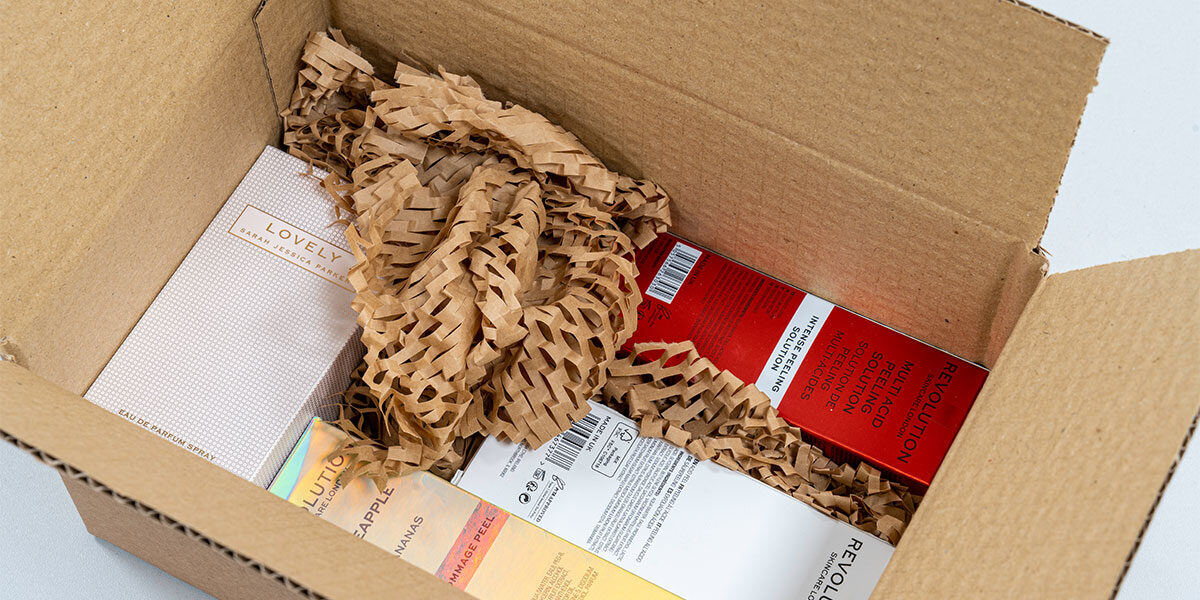
You choose your shipping boxes with care, but how does your interior packaging hold up? Kraft paper packaging can give you the cushioning you need. The unique design of the slit-paper product wrap and void fill transitions from 2D to 3D protection at your command. Plus:
- It can be dispensed manually or automatically.
- It stores flat to save space in your workspace.
- It comes in white and natural colors to match your aesthetics.
- It clings to itself, so no tape or adhesives are needed.
When you don’t even need a box, you’ll also find sustainable kraft paper mailing envelopes. These offer the same outstanding cushioning with none of the downsides of traditional bubble mailers.
Wood-Free Crating
We mentioned wood-free crating as a sustainable alternative above. In addition to being good for the planet, it’s better at protecting your merchandise from impact- and vibration-related damage.
Another benefit is that wood-free crating uses no screws or nails. That makes it safer for workers and customers to handle. And it’s much lighter than outmoded wood crating, making it easier to load, move, and unpack.
Compostable and Dissolvable Food Containers
The food industry has been under fire for years over its single-use packaging. So, many ahead-of-the-curve companies are switching to containers that can be composted or even dissolve when exposed to water. These packaging options are typically made from natural materials such as mushrooms, sugarcane, corn, or bamboo.
Manufacturers of consumer disposable tableware are making similar changes. At the grocery store, you’ll find compostable paper plates and bowls now. In place of disposable plastic party cups, you’ll see compostable choices or aluminum versions that can be recycled.
Sustainable Adjacent Alternatives
Understandably, some businesses can’t use sustainable packaging for everything outside of shipping. For example, it’s hard (if not impossible) to manufacture some health, beauty, and cleaning products in truly sustainable packaging. This is due to their safety requirements or chemical composition.
If you can’t switch to recyclable containers, though, you could make the product refillable. There are many products in the home and wellness sphere that offer this option. As a bonus, customers pay less for refills than for original items, which builds brand loyalty.
Another option is to encourage the user to repurpose the product container. Yogurt containers can hold garden seedlings and kids’ paints. Mint tins can be used for mini sewing kits, art supplies, or the popular Every Day Carry (EDC) kits. These are little kits that both kids and adults can use to hold handy things, such as:
- Bandages
- Medicines
- Loose change
- Safety pins
- Earphones
- Hair ties
- Lip balm
- Nail clippers
- Dental floss
Hikers and campers love them for toting emergency backcountry supplies, like fishing line and waterproof matches.
The idea is to reduce waste as much as possible by turning a single-use item into one with many purposes. The more you can make your business part of the circular economy, the better it is for the planet.
Try HexcelPack’s Suite of Sustainable Packaging Solutions
Are you ready to embrace sustainable packaging with your company? HexcelPack is here with a suite of solutions for all your needs.
You can test them out for yourself. Send us your items. We’ll repackage them and send them back to you in our sustainable packaging.
If you need dispensing assistance or help with small business MOQs, our team is ready to answer all your questions. Just reach out today.