Types of Packaging: Primary, Secondary, and Tertiary Layers

Finding the right packaging material is critical, but with so many options, it can be hard to choose. Of course, packaging protects goods in transit, but it can also enhance your branding and influence your customer experience.
Packaging layers are divided into different categories: primary, secondary, and tertiary. In this blog, we’ll compare sustainable packaging to traditional packaging materials, so you can see why making the switch is important for businesses of all sizes.
What Are the Layers of Packaging Materials?
Packaging is divided into three basic layers. Each one serves a different but equally important purpose:
- Primary packaging - the layer closest to the product that protects
- Secondary packaging - intermediary layers to protect and cushion items
- Tertiary packaging - outer packaging and wrap for shipping and storage
Let’s take a more in-depth look at these layers and what’s included in each one.
Primary Packaging
This is the packaging layer surrounding your item. Some merchandise, such as framed art or glassware, may not have primary packaging. But these types need it for containment and safety:
- Personal care and cleaning products
- Makeup and beauty items
- Food and beverages
- Pharmaceuticals and supplements
Primary packaging prevents spoilage and contamination. It can be used to dispense the product, such as a pump bottle of hair conditioner.
This layer of packaging can also reinforce your branding. Everyone instantly recognizes a bottle of Coca-Cola or the classic blue jar of Nivea skin cream, for example.
Secondary Packaging
Secondary packaging provides additional protection for your merchandise. It might be the box that a tube of toothpaste or a bottle of cough syrup comes in. This layer is another place to expand branding and include instructions and ingredients.
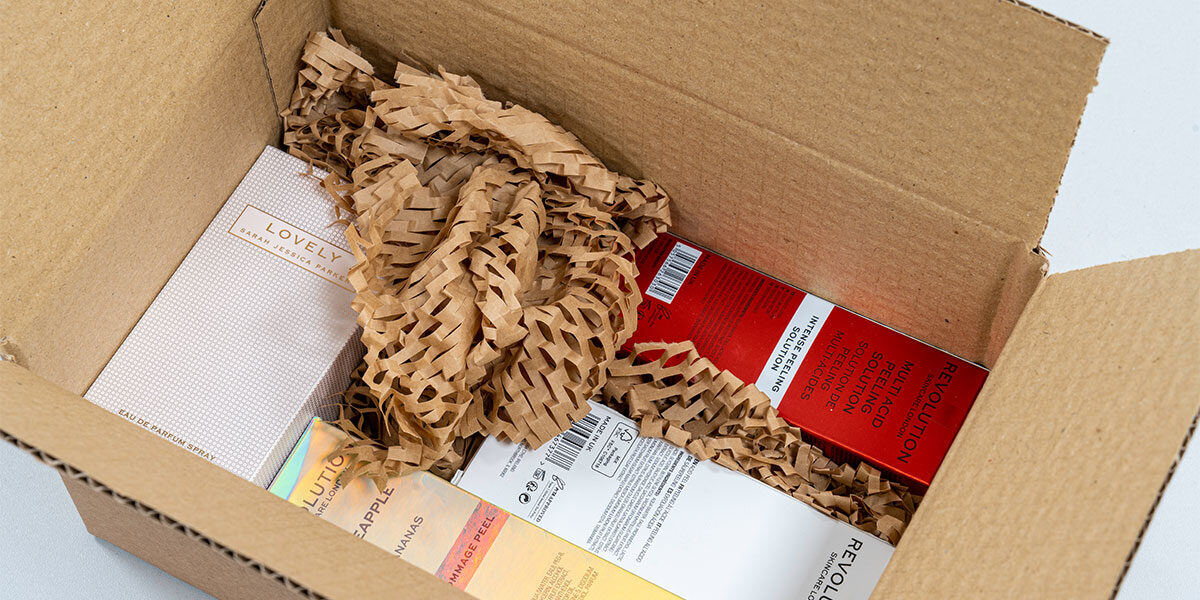
The secondary layer of packing material can also include product wrap or void fill used around items, with or without primary packaging. You might use product wrap to prevent two makeup boxes from rubbing against each other in a beauty subscription box. It’s also great for preventing ceramics and glassware from cracking. Those items may not have primary packaging, but they still need cushioning.
Void fill complements product wrap by filling empty spaces in a box. It could be the subscription box mentioned above, or the box you use to ship items to a customer. This type of secondary packaging helps prevent damage that can lead to costly returns and exchanges and unhappy customers. Your parcels might be bumped around on a delivery truck or tossed over a fence at their destination. They need the best cushioning possible to arrive like new.
Tertiary Packaging
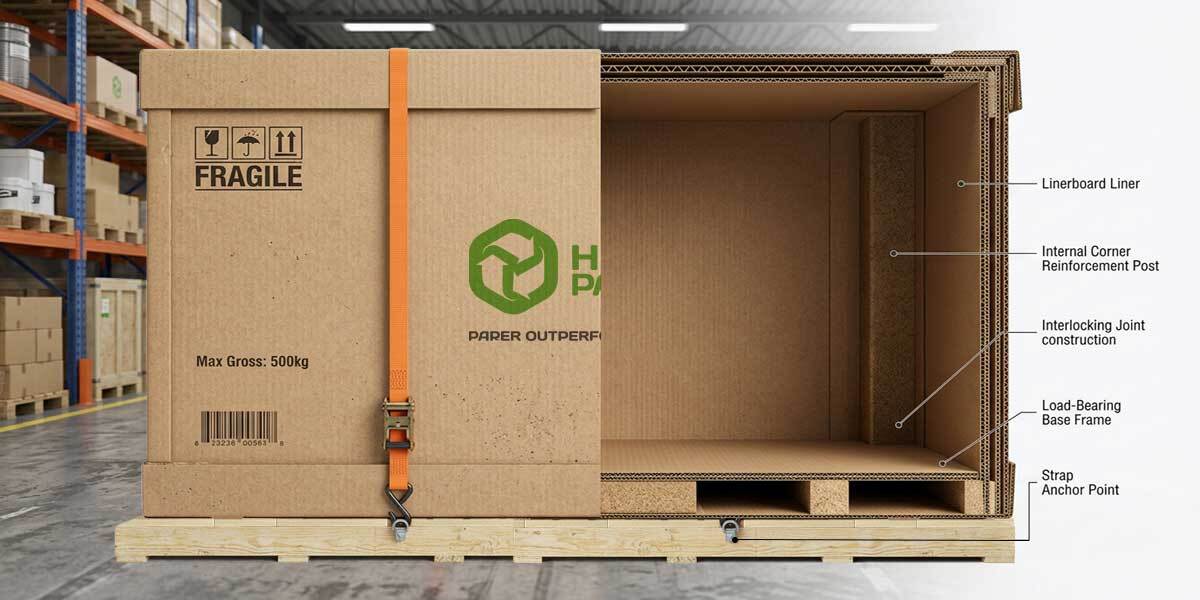
Tertiary packaging is the outermost layer. That might include:
- The familiar cardboard box you ship items to customers in (the most common usage for many businesses)
- A protective mailer used in place of a box for small, fragile items (saves on shipping costs by weight or dimension)
- A wood-free crate to transport larger items, like medical equipment (better cushioning and more sustainable)
This layer is largely protective. But it also offers another branding opportunity. For instance, you might print your company’s logo on a cardboard box, along with instructions to please recycle it after use. That associates your company with earth-friendly practices while also putting your logo in front of the customer again.
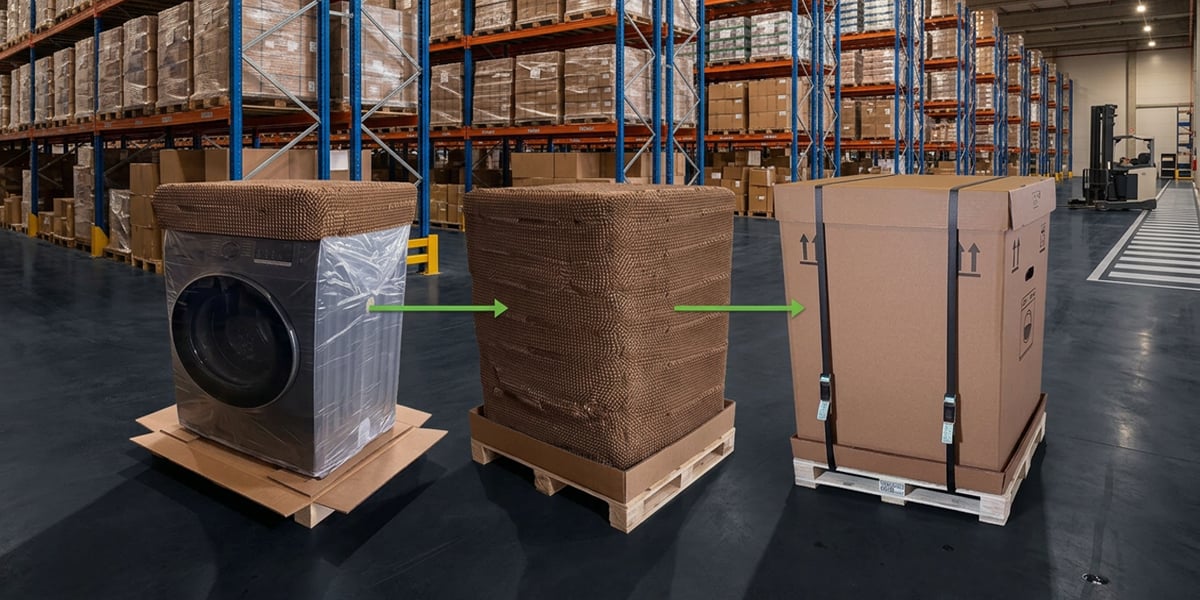
Tertiary packaging can also include pallet wrap. This stretch wrap wraps multiple boxes or containers for bulk shipping and storage. Pallet wrap serves multiple purposes:
- Prevents movement during transport: It keeps items stable and secure, preventing them from shifting or falling during transit. This is especially important for fragile items or large shipments that must remain intact throughout the journey. And it safeguards workers from on-the-job accidents.
- Makes loading and unloading more efficient: Pallet wrap consolidates loose items into one large load. It makes moving the load much faster and easier with a forklift or pallet jack.
- Reduces the risk of damage: By securely fastening items together, tertiary packaging such as pallet wrap reduces the risk of damage from friction, shifting, or impact. And it discourages theft and tampering of items in transit or sitting in a warehouse.
Choose Sustainable Materials for Your Secondary and Tertiary Layers
No matter what type of business you run, it’s smart to make your secondary and tertiary layers sustainable. That means they’re:
- Curbside recyclable and/or compostable
- Made from renewable resources
- Manufactured with a lower impact on the planet
- Nontoxic with exposure via touch or breathing
Old-fashioned plastic and foam packaging layers are generally not sustainable. They cannot be recycled with regular refuse, if at all, and they’re often harmful to the earth and human health. For example, plastic packaging releases microplastics that are linked to a wide range of human health problems.
Plastic packaging is also being phased out around the US and across the globe in favor of sustainable alternatives. You may find that your customers prefer sustainable packaging, so it helps your brand ship items in eco-friendly packaging materials.
The chart below compares sustainable packaging with traditional choices. You can see that sustainable packaging comes out on top in every case. And if you choose the right sustainable packing options with slit-paper honeycomb structure, you enjoy better performance while reducing waste. You’ll even find sustainable paper pallet wrap that improves load stability with less material.
|
Product Feature |
Traditional Packaging (e.g., plastic) |
Sustainable Packaging (e.g., HexcelPack) |
|
Disposal |
Difficult or even impossible to recycle, often ends up in landfills and oceans |
Can be curbside recycled, composted, or baled for resale |
|
Manufacture |
Uses non-renewable resources, producing a higher carbon footprint and more pollution |
Made with renewable resources, like kraft paper |
|
Efficiency |
May require more material to achieve adequate protection, increasing costs and labor, and producing more waste |
Provides efficient cushioning, reducing material use, decreasing returns, and streamlining efficiency |
|
Safety |
May contain toxic chemicals that pose health hazards from breathing and touching |
Safe for both employees and customers, even with frequent handling |
|
Compliance |
Will not meet upcoming European regulations for sustainable packaging by 2030 or new rules being phased in across the US, Oceania, and Asia |
Designed to comply with evolving global sustainability regulations |
|
Brand Image |
Can negatively impact consumer perception, especially among eco-conscious buyers |
Enhances brand reputation with sustainability-focused consumers who prefer responsible businesses |
Make the Switch to HexcelPack
When you’re ready to switch to sustainable packaging for all the advantages listed above, HexcelPack is here to help. We offer a suite of sustainable packaging solutions to meet the needs of businesses of all sizes across every industry.
You can see for yourself how well our secondary and tertiary packaging layers work. Send us a sample of your product. We’ll re-wrap it, pack it, and send it back to you. Reach out to our team today to learn more.