Lightweight Packaging: The Best Way to Reduce Shipping Costs
Is your business paying too much for heavy packaging? If you’ve considered switching to lightweight packaging to reduce shipping weight, it can be hard to know where to start.
Switching to lightweight packaging offers several benefits, including lower shipping costs. How can you get started? In this guide, you'll learn helpful tips to reduce shipping costs and start saving money today.
The Importance of Reducing Shipping Expenses
Logistics Costs Add Up Fast for Large Businesses
If you work in one of these positions, you probably spend a great deal of time searching for ways to reduce freight spend:
- Fulfillment director
- E-commerce operations manager
- Packaging engineer
- Procurement manager
You might be in the C-suite of an enterprise-level company or run a subscription box brand. Either way, reducing shipping costs yields significant downstream benefits. This is particularly true in 2026, when trucking industry experts are predicting greatly reduced freight capacity, and costs are rising.
The higher the volume you ship, the more essential it is to whittle down the cost of each package. Multiply the amount paid to send each parcel by thousands or tens of thousands of units, and you’re looking at a significant expense. Lower that expense, and you increase your profitability.
Small Businesses and Startups Often Run Lean
While large businesses obviously spend more on shipping, the costs for small companies and startup ventures can be more critical to survival. If you’re a small or medium-sized business, every dollar counts. Slimming your shipping budget can free up funds for other vital things or even keep you above water long enough to start turning a profit.
5 Ways to Lower the Cost of Shipping Packages
Choose the Right Packaging for the Job
When seeking to reduce shipping costs, the first place to look is your selection of packing materials. This often starts with selecting an outer box. Have you ever received a package at home in a large carton only to find a small item at the bottom surrounded by excessive cushioning?
Or maybe you got a box within a box when one would have been sufficient. There are several reasons this happens.
Sometimes it’s due to a habit in the packing area, where workers grab the same box for everything. Other times, a lack of training or an inefficient assembly process leads employees to use oversized boxes.
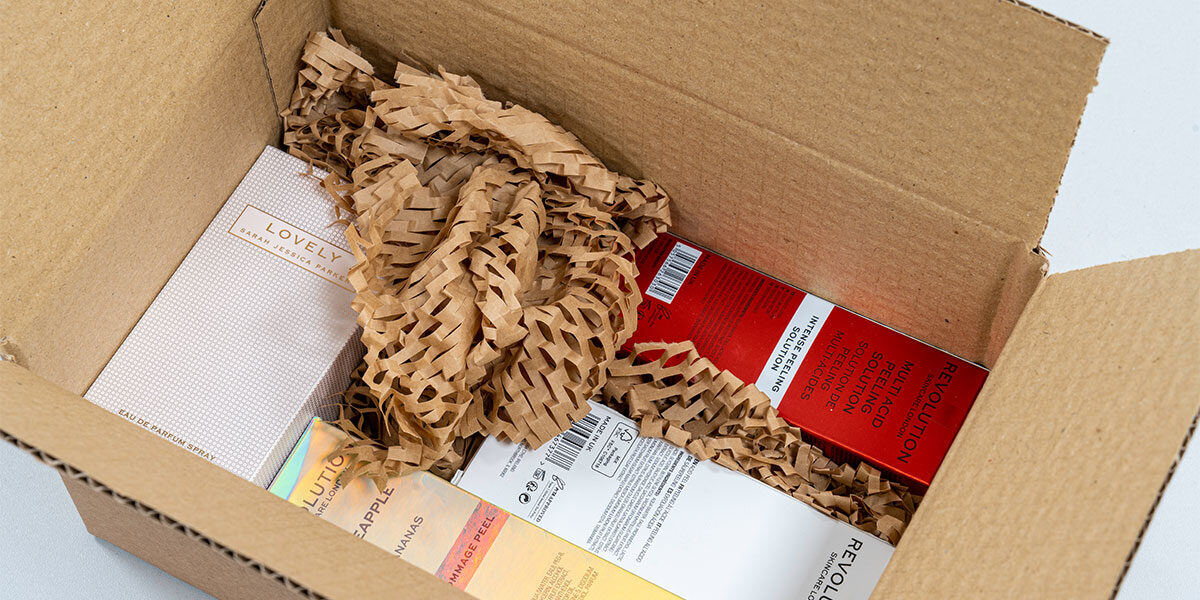
Excessive inner packaging to cushion items can also push the size of your shipping boxes. This usually stems from using product wrap or void fill that doesn’t adequately protect your merchandise. It may be subpar to begin with or flatten out over time during shipping and storage.
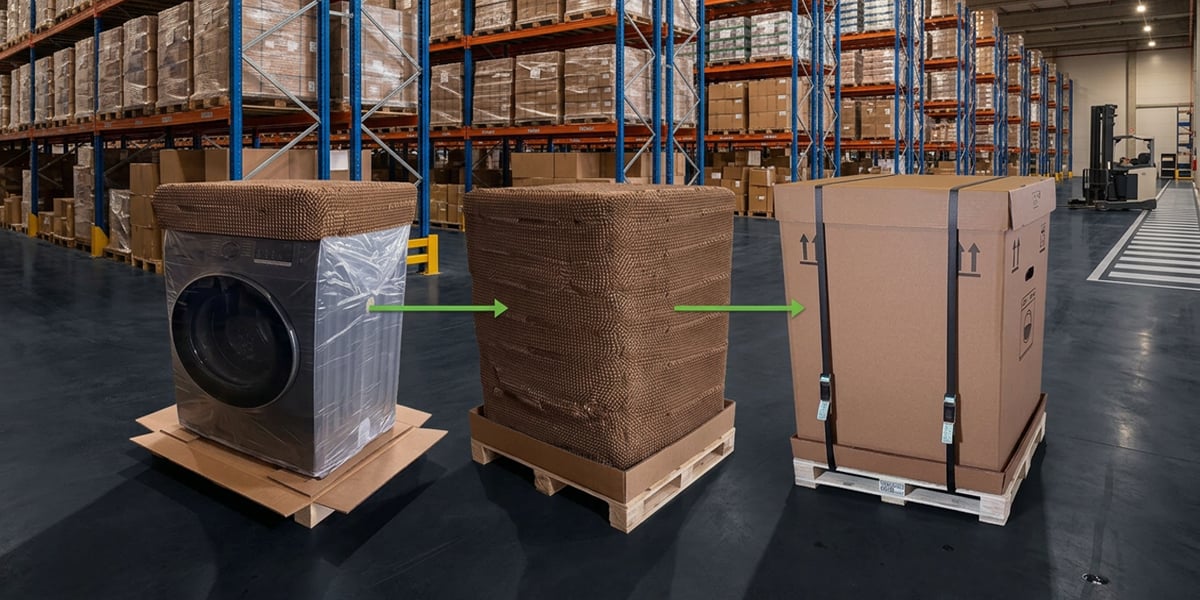
Selecting lightweight yet sturdy packaging materials that provide the right level of protection from the start is essential, such as kraft paper with a honeycomb design, which offers superior strength in minimal space. As a bonus, you’ll notice fewer returns for damage—another way to lower expenses and increase profits.
Using the right packaging from start to finish not only makes your parcels lighter but also reduces overall shipping costs. It also helps reduce dimensional shipping costs when your freight spend is determined by box size.
Use Automated Dispensing for Packing Consistency
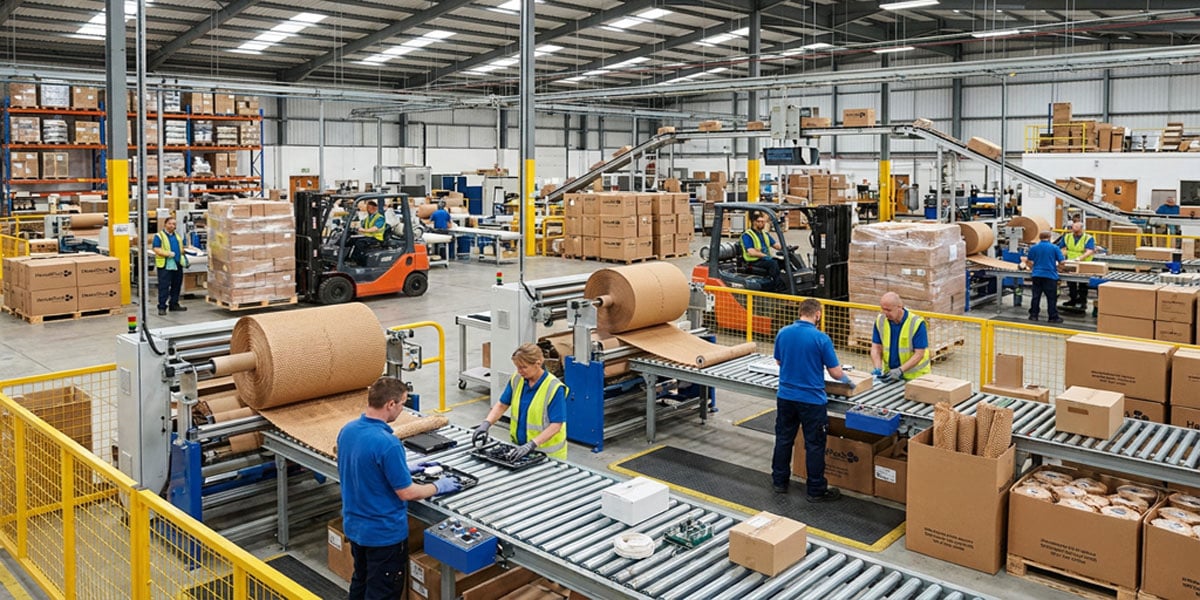
Another reason your business may be wasteful with inner packaging, such as void fill, is inconsistent dispensing. You can address this on the packing floor by using the right automated dispensing system.
Choose a machine that offers:
- Easy push-button settings to set speed and amount
- Foot pedal for hands-free on and off control
- Wheels to reposition in a new spot as needed
This is ideal for companies with many employees performing packing tasks, especially those that hire seasonal workers and have little time for training and supervision.
Don’t Use a Box When It’s Not Needed
You may not even need to use a box to ship many items, though this is often the default outer packaging. For small items, skip the wasteful box and opt for a protective mailer instead.
A cushioned envelope made from the same slit-paper structure described above is much lighter and smaller. Businesses of all sizes will see lower costs immediately, and the packing process will be faster than box assembly.
Customize Crating: Go Lightweight and Wood-Free
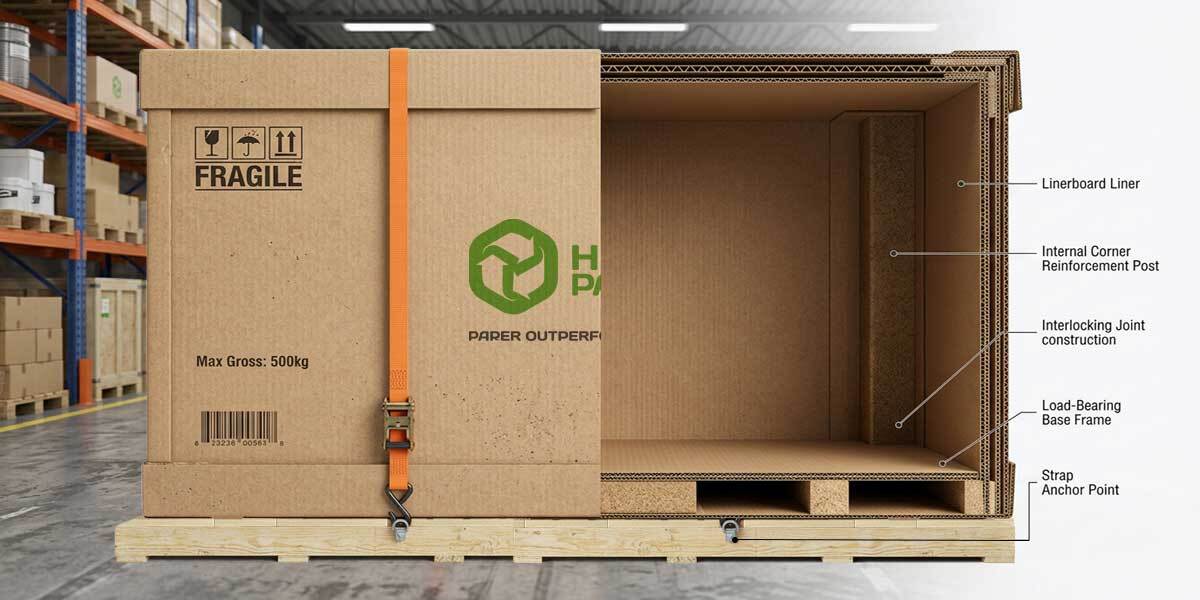
Is your company still using outdated wood-free crating to ship heavy or oversize items such as machine parts, medical equipment, aerospace components, or gallery art? Ditch heavy, outdated wooden crates, which come with many downsides, and use wood-free crating instead.
Wood-free crating is significantly lighter than wood and offers numerous benefits. One way to reduce shipping costs, in addition to reducing weight, is to customize the crating. You can decrease a crate’s overall dimensions. Plus, the superior impact and vibration protection lets you reduce unnecessary filler that adds weight and costs to supply.
Reuse Packaging Internally
Regarding reducing packing supply costs, do you ship parcels internally within your company between branches? There’s no need to use a brand-new box or interior packaging with every shipment.
If you choose the right packing supplies, you can get multiple uses from the material, including for wood-free crating. Use sustainable packaging, and when you’re done, dispose of it in your curbside recycling, not the trash.
Combine Better Protection with Sustainability
Another benefit of Kraft paper packaging with honeycomb technology is its sustainability. That means it can be recycled or composted at the end of its lifecycle. Plastic and foam packaging that isn’t curbside recyclable usually winds up in landfills, where it pollutes the planet.
The chemicals and microplastics produced by the breakdown of old-fashioned, unsustainable packaging are harmful to the environment and to humans. New studies show that microplastics (also known as nanoplastics) are present in rain, snow, and the food chain. They are associated with a long list of health problems, including cardiovascular disease, which is already a top cause of death in US adults.
Sustainable packaging has a lower environmental impact. And it’s safer for workers and customers who handle it. Plastic packaging, on the other hand, can cause health problems from skin contact and inhalation.
As a final upside, sustainable packaging is increasing in demand among savvy consumers, especially within younger demographics. And it will soon be required by multiple US states and European Union nations. To stay compliant, your business will eventually be required to eliminate single-use packaging and adopt sustainable alternatives.
Partner with HexcelPack to Reduce Your Company’s Shipping Costs
Are you ready to put these ideas into practice in your business to lower shipping expenses? HexcelPack’s team of experts is here to help you choose the right packaging and dispensing systems to both save money and improve customer satisfaction.
We’d like to hear more about your packaging challenges and offer solutions. Get in touch with our crew today and start reducing freight spend now.